
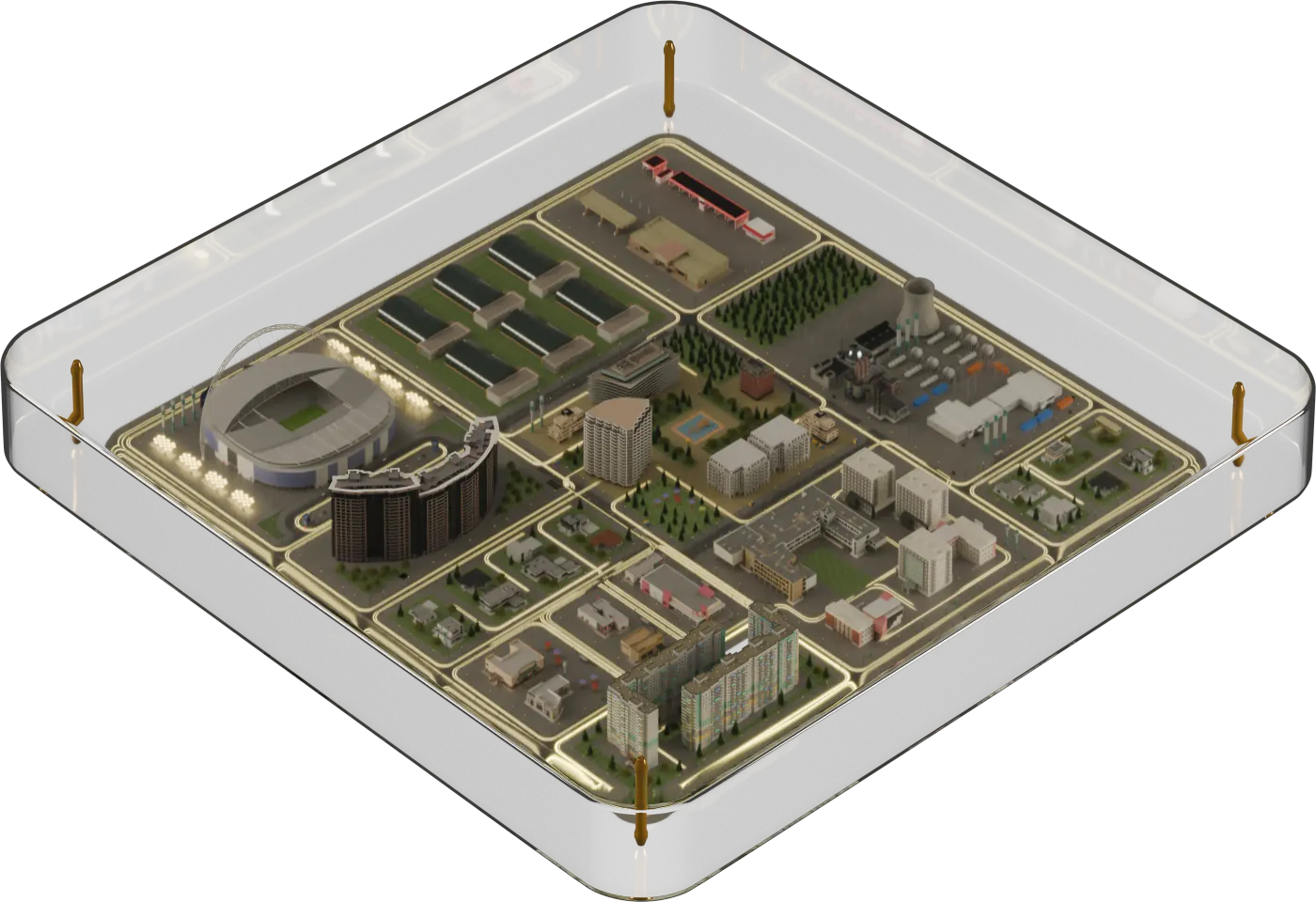
Residential Real Estate
Give the home a persistent identity beyond the transaction.
Residential real estate workflows typically organize information around the property being bought or sold.
But the structure itself can accumulate years or decades of history before and after any individual transaction.
PIID™ provides a persistent reference that can continue across:
Property listings.
Ownership transitions.
Inspections.
Insurance.
Financing.
Permits.
Improvements.
Repairs.
Property intelligence.
Future transactions.
Residential Real Estate
One home. Many transactions. One persistent structure identity.
PIID™ establishes that persistent structure reference.
The real estate identity problem
The property has references.The structure needs identity.
A real estate asset may be represented through:
An address.
A parcel.
A listing ID.
A transaction record.
A property database identifier.
A brokerage system.
A lender record.
An insurance policy.
A GIS object.
A portfolio identifier.
Those references are valuable within the systems that created them.
But none necessarily provides persistent identity for the physical structure itself.
PIID™ establishes that persistent structure reference.
Different records. Same physical structure. One persistent identity.
- Address
- Parcel
- Listing
- Mortgage
- Insurance
The structure as the constant
Ownership changes.The physical asset remains.
A structure can be:
Listed.
Purchased.
Sold.
Financed.
Insured.
Renovated.
Leased.
Managed.
Refinanced.
Transferred.
Repositioned.
Sold again.
Each event can introduce new systems, records, organizations, and identifiers.
PIID™ remains associated with the physical structure.
The transaction changes. The structure identity persists.
Residential buyers
Understand the structure being purchased.
Homebuyers receive information from multiple sources.
Listings.
Inspections.
Property records.
Permits.
Risk information.
Neighborhood data.
Insurance.
Financing.
Contractor records.
Lifecycle Report™ organizes supported structure identity, property intelligence, records, events, and lifecycle context around PIID™.
This creates a clearer view of the physical asset being evaluated.
Know the structure before owning the structure.
Residential sellers
Carry clearer structure context into the next transaction.
A seller may have accumulated years of information about the property.
Improvements.
Permits.
Repairs.
Inspections.
Warranties.
Reports.
Maintenance information.
PIID™ provides a persistent structure identity around which supported information can remain organized through ownership transition.
The next owner may change.
The physical structure remains.
Brokerage and property platforms
Add persistent structure identity to the transaction environment.
Real estate platforms frequently maintain their own property and listing identifiers.
Those identifiers serve important transactional purposes.
PIID™ serves a different role.
It identifies the physical structure independently of the listing, brokerage, transaction, or platform representing it.
A listing can reference PIID™.
A brokerage system can reference PIID™.
A property intelligence platform can reference PIID™.
A future transaction can reference the same PIID™.
Listings expire. Structure identity persists.
PIID Resolve™
Resolve fragmented property references to the physical structure.
PIID Resolve™ identifies, validates, and resolves supported property and structure references to persistent infrastructure identity.
Supported inputs can include:
Normalized Address
Parcel
PIID™
Coordinates
Geometry
Supported Source Reference
This allows real estate systems to reconcile different representations of the same physical structure around one persistent identity.
Submit a reference. Resolve the structure. Return persistent identity.
PIID Resolve™Due diligence
Begin diligence with clarity about the physical asset.
Real estate diligence often brings together information from:
Property records.
Surveys.
Inspections.
Insurance.
Permits.
Environmental sources.
Engineering reports.
Financial records.
Leases.
Capital plans.
Contractor records.
Geospatial systems.
Before those records can be interpreted together, the underlying physical structure needs to be clear.
PIID™ provides the persistent structure reference.
Resolve the asset first. Evaluate the information around it second.
Transaction continuity
The closing should not reset the identity of the property.
A transaction changes ownership.
It should not require the physical structure to become a different asset in every downstream system.
PIID™ provides a persistent identity capable of continuing across:
Buyer systems.
Seller systems.
Brokerage systems.
Lending systems.
Insurance systems.
Property management platforms.
Portfolio systems.
Future transactions.
New owner. Same structure. Same persistent identity.
Lifecycle Report™
A property report organized around persistent identity.
Lifecycle Report™ brings supported structure identity, property intelligence, records, events, and lifecycle context together around PIID™.
For real estate workflows, it provides a connected view of the structure beyond a single listing, transaction, or ownership period.
A conventional property report describes a property at a moment in time. Lifecycle Report™ is organized around the identity and lifecycle of the physical structure itself.
Lifecycle Report™Lifecycle continuity
The structure has a life beyond any transaction.
Real estate systems are frequently organized around moments.
Listing.
Acquisition.
Financing.
Insurance.
Lease.
Sale.
Lifecycle™ provides the framework through which supported records, relationships, and events can remain connected around the same persistent structure identity through those moments.
Transactions are events. The physical structure is the constant.
Lifecycle™Insurance
Keep insured structures consistently identified.
Commercial and residential real estate depend heavily on insurance.
Insurance systems may reference the physical asset differently from brokerage, property, lending, or portfolio environments.
PIID™ provides a persistent structure identity that can support clearer coordination across supported property and insurance workflows.
Different systems. Same insured structure. One persistent identity.
InsuranceMortgage and lending
Keep collateral connected to the physical structure.
Loans can be originated, serviced, transferred, refinanced, securitized, or retired.
The physical collateral remains.
PIID™ provides a persistent structure reference capable of continuing across supported lending and real estate workflows.
The loan changes. The structure remains.
MortgageProperty data and intelligence
Add persistent identity beneath property information.
Property intelligence platforms combine large volumes of information.
Ownership.
Characteristics.
Transactions.
Risk.
Location.
Geometry.
Permits.
Market information.
Property attributes.
PIID™ adds persistent structure identity beneath supported information.
This can create stronger continuity when records from different sources describe the same physical asset.
More property data becomes more useful when structure identity is clear.
GIS, mapping and geospatial intelligence
Connect property location to structure identity.
Real estate depends heavily on addresses, parcels, maps, imagery, and building footprints.
Those spatial references remain important.
PIID™ adds persistent identity for the physical structure.
Location tells you where. PIID™ tells you which structure.
GISArtificial intelligence
Give real estate AI persistent physical asset context.
AI increasingly analyzes:
Property data.
Listings.
Documents.
Transactions.
Risk.
Images.
Geometry.
Inspection records.
Market information.
Portfolio data.
Without persistent identity, systems may repeatedly need to determine whether different records describe the same structure.
PIID™ provides a consistent physical asset reference.
Persistent identity creates persistent machine context.
Cross system interoperability
Real estate does not need one database.
Brokerage systems.
Property databases.
Lending platforms.
Insurance systems.
GIS.
Facilities applications.
Portfolio systems.
Enterprise platforms.
Government records.
AI.
Each serves a different role.
PIID™ gives supported environments a persistent reference to the same physical structure without requiring those environments to become one system.
Different systems retain their role. Identity becomes the connection point.
Data control
Persistent identity does not require centralizing real estate data.
UMIP does not require brokers, owners, property platforms, data providers, lenders, insurers, or enterprise customers to migrate all underlying records into a central repository.
Existing systems can remain.
Existing identifiers can remain.
Provider data can remain within provider environments.
PIID™ provides the persistent structure reference through which supported information can coordinate.
Connection does not require centralization.
Enterprise delivery
Built for real estate technology and institutional workflows.
PIID Resolve™ is designed for structured enterprise integration.
Supported JSON responses can provide:
PIID™
Verification Context
Registry Context
Structure Context
Building Geometry
Property Context
Supported Source References
Integration environments can include:
Property platforms.
Brokerage systems.
Portfolio systems.
Due diligence applications.
Risk platforms.
Lending systems.
Insurance systems.
GIS.
Enterprise data platforms.
Artificial intelligence.
API delivered. Machine readable. Built for integration at scale.
Built on UMIP
Persistent identity across the real estate lifecycle.
PIID™
Provides persistent identity for each qualifying physical structure.
PIID Resolve™
Resolves supported property, spatial, and source references to structure identity.
Lifecycle™
Maintains continuity around structure identity through time.
UMIP Registry™
Maintains persistent infrastructure identity and supported registry context.
UMIP Structure Schedule™
Documents qualifying structures within complex properties.
Coming Soon
In development
Governed by GIIS™
Persistent real estate identity requires consistent rules.
Real estate spans owners, buyers, sellers, brokers, lenders, insurers, governments, technology providers, and decades of physical asset life.
GIIS™ establishes the governance framework supporting consistent Persistent Infrastructure Identity across those environments.
PIID™ provides the structure identity.
GIIS™ provides the governance foundation supporting its continuity.
Identity establishes the reference. Governance protects its continuity.
At scale
Persistent identity for the physical assets behind the real estate economy.
- 189M+PIIDs Registered Across the United States
Real estate will continue producing more data, more transactions, more automation, and more intelligent systems.
The physical structure beneath those environments still needs a persistent reference.
Structure Identity → Transaction Continuity → Interoperability → Lifecycle Intelligence
Residential Real Estate
One home. Many transactions.One persistent structure identity.
Listings expire.
Transactions close.
Loans change.
Policies change.
Owners change.
Technology changes.
The physical structure remains.
PIID™ gives that structure a persistent identity capable of continuing across the systems, organizations, and decisions that surround real estate.
Different owners. Different systems. Same physical structure. One persistent identity.
Related
Resolve physical structures to persistent infrastructure identities. PIID Resolve™ identifies, validates, and resolves structures from addresses, parcels, coordinates, geometry, and supported source records.
Bring structure identity, property intelligence, records, documents, events, and insights together around one persistent infrastructure identity.