
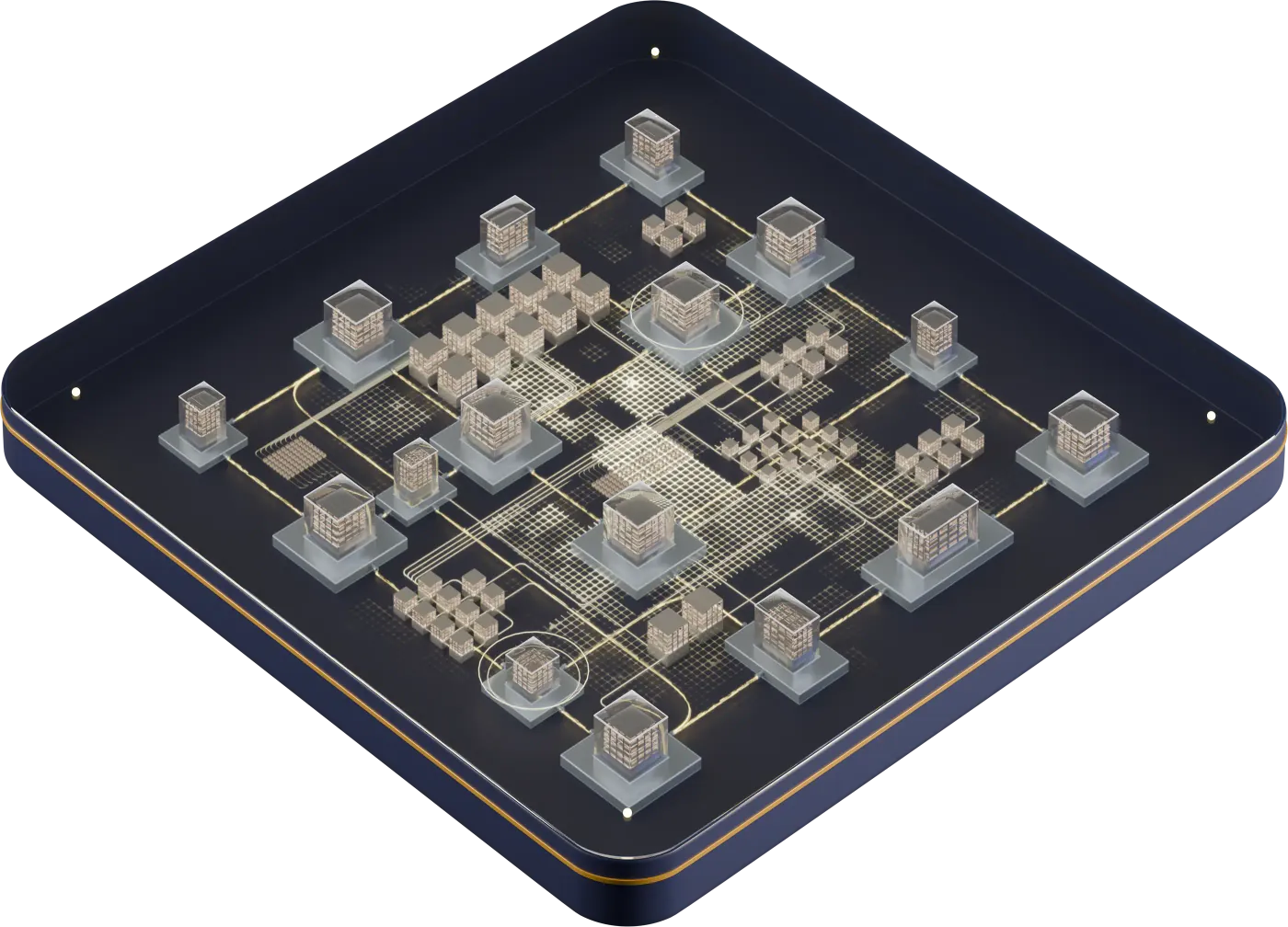
Lifecycle™
Identity through time.
Identity through time.
Lifecycle™ is the UMIP record framework for maintaining continuity around the persistent identity of a physical structure as records, events, ownership, systems, and organizations change.
PIID™ establishes which structure it is.
Lifecycle™ establishes how supported attributes, records, events, relationships, and history remain connected to that same structure through time.
One structure. One persistent identity. A connected lifecycle.
What Lifecycle™ is
The framework for continuity around the asset.
Infrastructure does not remain static.
Every stage of its life can create new records, identifiers, organizations, and systems.
Lifecycle™ provides the framework through which supported information can remain associated with the same persistent structure identity across those changes.
The events change. The identity does not.
Why Lifecycle™ exists
Records without persistent identity become fragmented history.
A permit may reference an address.
An insurer may reference a policy.
A lender may reference a loan.
A contractor may reference a project.
A government agency may reference a parcel.
An owner may maintain another record.
Each can describe activity involving the same physical structure.
Without persistent identity, those records can remain disconnected.
Lifecycle™ establishes PIID™ as the persistent structure reference through which supported records and events can maintain continuity across systems and time.
Identity turns isolated records into connected history.
How it fits the platform
One platform. Three foundational layers.
Foundation
PIID™
Establishes the persistent identity of the physical structure.
Record Framework
Lifecycle™
Establishes how supported records, attributes, events, relationships, and history remain connected to that identity through time.
System of Record
UMIP Registry™
Maintains PIID™ identities, supported verification context, source relationships, and registry continuity.
The Lifecycle model
One structure across decades of change.
Lifecycle™ provides continuity as the structure moves through the stages of its physical and economic life.
Planning
Early records, approvals, design activity, and supported project references begin forming around the future asset.
Construction
Permits, inspections, project activity, structure information, and supported delivery records become associated with the physical structure.
Ownership
Ownership and transaction relationships can change while the structure identity remains constant.
Financing
Loans, collateral relationships, refinancing activity, and supported financial records can reference the same physical asset.
Insurance
Policies, underwriting information, claims, catastrophe exposure, and supported risk records can remain associated with the structure through time.
Operations
Maintenance, inspections, facilities activity, energy information, and supported operational records continue around the same persistent identity.
Improvements
Renovations, additions, repairs, upgrades, and supported physical changes can be associated with the structure they affect.
Events
Supported lifecycle events can be connected to the same asset regardless of which organization or system generated the record.
Transition
Ownership, operators, systems, and providers may change while the persistent identity of the physical structure remains.
One asset. Many events. Persistent continuity.
Identity before history
History becomes more useful when every event references the same asset.
A timeline alone does not create continuity.
The events must first resolve to the same physical structure.
PIID™ provides the persistent identity.
Identity first. Continuity follows.
Lifecycle principles
A record framework designed around persistence.
Persistent Reference
Supported information remains associated with the same physical structure through PIID™.
Temporal Continuity
Events can be understood in relation to the same asset across years and decades.
Source Relationships
Supported source references can remain connected to the structure without requiring every source system to become UMIP.
Event Attribution
Supported lifecycle events can be associated with the structure they affect.
Cross System Coordination
Different systems can retain their own records while referencing the same persistent structure identity.
Structure Level Context
Lifecycle information is organized around the physical structure rather than relying only on an address or parcel.
The structure becomes the organizing reference.
Lifecycle Report™
The product expression of lifecycle continuity.
Lifecycle Report™ brings structure identity, property intelligence, supported records, documents, events, and lifecycle context together around one persistent infrastructure identity.
The report provides a readable expression of the Lifecycle™ framework for consumers, professionals, institutions, and enterprise workflows.
Lifecycle™ is the framework. Lifecycle Report™ is the product built around that framework.
Explore Lifecycle Report™UMIP Structure Schedule™
Structure inventory before lifecycle context.
UMIP Structure Schedule™ is being developed to document the qualifying structures associated with a property through PIID™, location, geometry, and parcel relationship.
Where a property contains multiple structures, establishing which physical structures exist provides a clearer foundation for connecting lifecycle information to the correct asset.
Structure Schedule™ documents what exists. Lifecycle™ connects what happens through time.
Coming Soon
In development
PIID Resolve™
Lifecycle continuity begins with correct identity.
PIID Resolve™ identifies, validates, and resolves physical structures to persistent infrastructure identities.
Supported addresses, parcels, coordinates, geometry, and source references can resolve to the same physical structure through PIID™.
Resolve the structure first. Connect its history second.
PIID Resolve™Data architecture
Continuity does not require centralizing every record.
Lifecycle™ does not require every underlying provider dataset, source record, or external system to be copied into UMIP.
Organizations can retain their existing records, systems, identifiers, and data environments while PIID™ provides the persistent structure reference through which supported information can coordinate.
Connection does not require centralization.
Interoperability through time
Different systems. Same structure. Same lifecycle reference.
An insurer may create one record.
A lender may create another.
A government system may maintain permits.
A contractor may maintain project information.
A facility system may maintain operational records.
An energy system may maintain another history.
Lifecycle™ connects supported information to the same persistent structure identity without requiring those systems to become one system.
One structure identity across systems and through time.
Built for machines and people
Lifecycle context for an increasingly intelligent infrastructure economy.
For people, Lifecycle™ creates a clearer history of the structure.
For enterprise systems, it creates continuity across workflows.
For AI, it provides persistent asset context across changing data sources and events.
Persistent identity creates persistent context.
Governed by GIIS™
Lifecycle continuity requires consistent rules.
GIIS™ establishes the governance framework for persistent infrastructure identity and the consistent treatment of structure references across systems and organizations.
The Infrastructure Lifecycle Identity Model within GIIS™ describes how persistent identity maintains continuity through planning, construction, operations, improvements, inspections, financial relationships, ownership transitions, and other lifecycle stages.
GIIS Foundational Standard
One persistent identity across the life of the asset.
The GIIS™ lifecycle model establishes the structure as the continuous reference across changing systems, events, and stakeholders.
Planning.
Construction.
Ownership.
Operations.
Insurance.
Financing.
Improvements.
Inspection.
Claims.
Recovery.
Transition.
Through every phase, PIID™ remains the persistent identity of the physical structure.
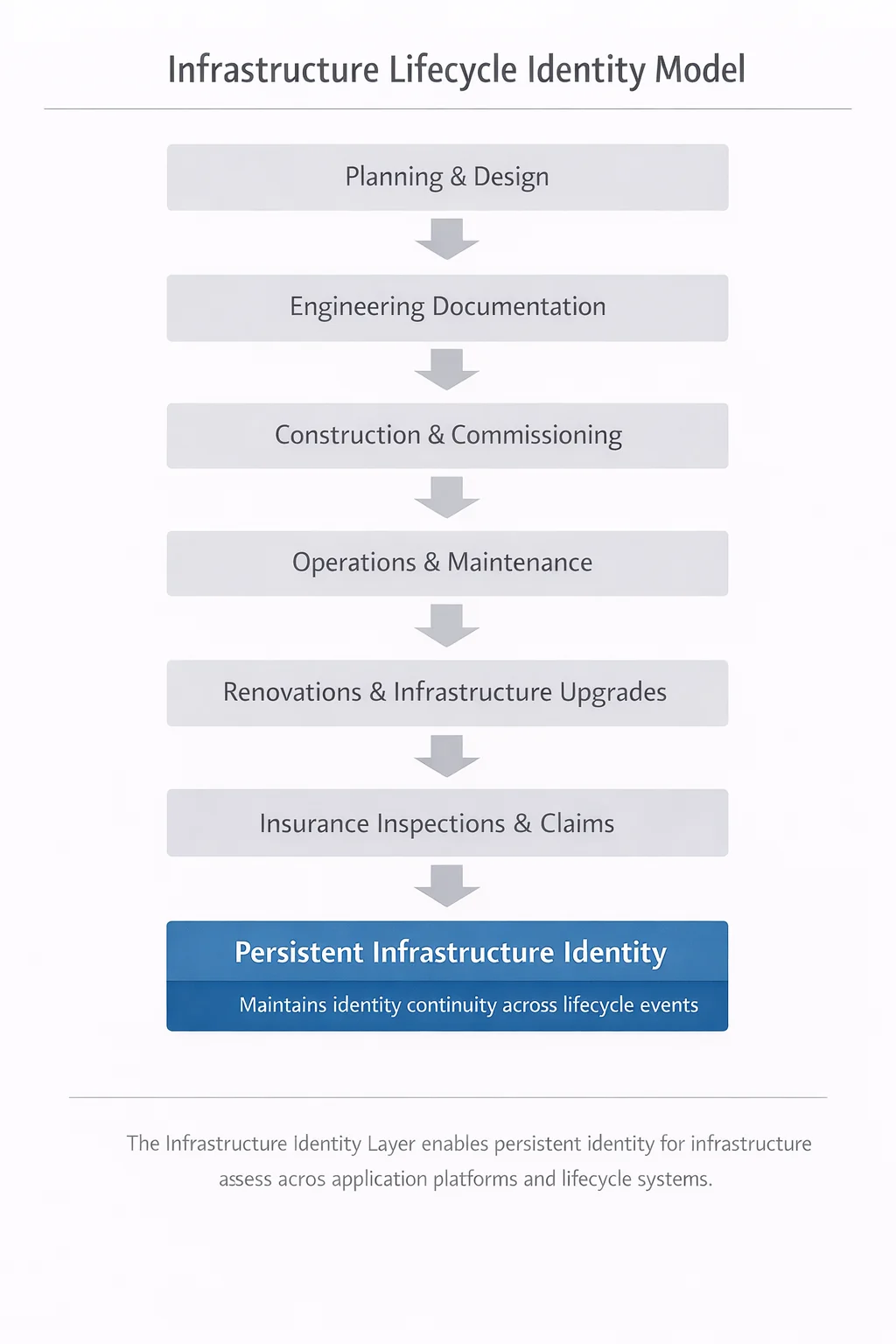
The lifecycle changes. The identity persists.
Persistent Infrastructure Identity in the public record.
Independent industry coverage documents the need for structure identity and lifecycle continuity across construction, facilities, insurance, government, infrastructure, and the broader built environment.
Facility Executive · 2026-08-11
What The Former Pfizer HQ Failure Should Make You Ask About Your FacilityIndependent coverage in Facility Executive.
Digital Construction · 2026-08-07
The built environment has an identity crisisIndependent coverage in Digital Construction.
CCR-Mag · 2026-08-04
The Built Environment Is Missing an Identity LayerIndependent coverage in CCR-Mag.
Identity gives infrastructure continuity through time.
PIID™ identifies the physical structure.
Lifecycle™ connects supported records, events, relationships, and history around that identity.
UMIP Registry™ maintains the persistent identity framework.
One structure. One identity. Through the life of the asset.