
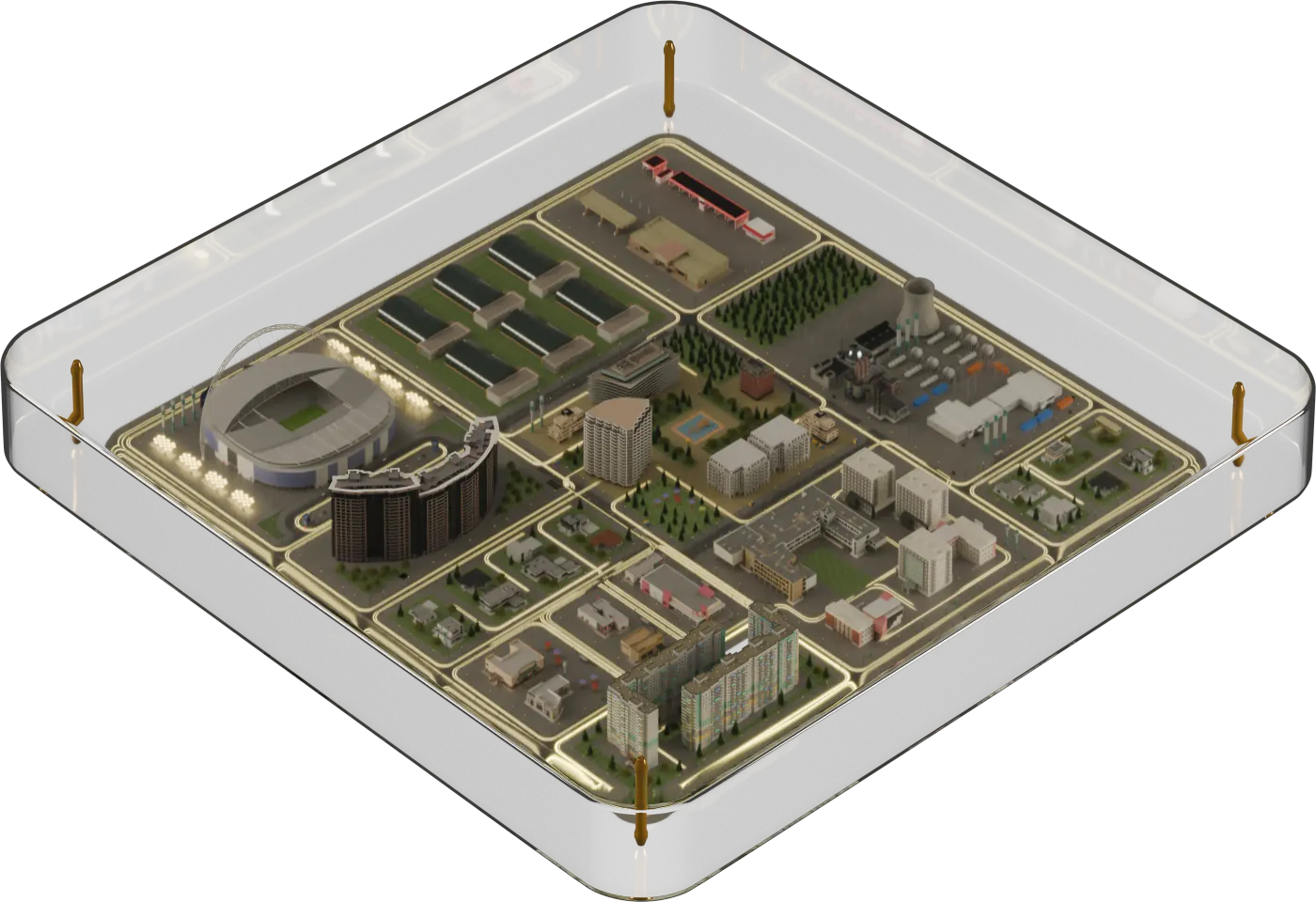
Core Identity Layer
PIID™
The persistent identity for physical infrastructure.
Platform
UMIP is the identity platform for physical infrastructure.
It provides a persistent reference through which supported systems, organizations, and industries can reference the same physical structure consistently.
Identity first. Continuity follows. Interoperability by design.
The Foundation
The built world is represented across thousands of systems.
Insurance platforms.
Government records.
GIS.
BIM.
Facilities systems.
Lending platforms.
Construction technology.
Digital twins.
Enterprise applications.
Artificial intelligence.
Each system can maintain its own identifiers, records, and operating environment.
UMIP establishes that identity layer.
Enterprise Systems
PIID™ provides the persistent structure reference between them.
Platform Architecture
Core Identity Layer
The persistent identity for physical infrastructure.
Foundation Layer
The physical world organizations build, operate, finance, insure, regulate, maintain, and depend on.
Lifecycle Layer
Identity through time.
Data & Trust Layer
The system of record for persistent infrastructure identity.
Governed by GIIS™
GIIS™, the Global Infrastructure Identity Standard, provides the governance framework supporting Persistent Infrastructure Identity.
Physical Infrastructure
Before there is an insurance policy, loan, permit, BIM model, maintenance record, GIS object, or digital twin, there is a physical structure.
UMIP begins there.
Not with the transaction.
Not with the software record.
Not with the address.
Not with the parcel.
With the physical structure itself.
The Reference Layer
An address describes location.
A parcel identifies land.
Coordinates identify position.
Building footprints describe geometry.
Enterprise identifiers identify records within individual systems.
PIID™ serves a different role. It persistently identifies the physical structure itself.
Different identifiers. Same physical structure. One persistent identity.
Interoperability
An insurer may reference a policy. A government system may reference a parcel. A facilities platform may reference an internal building number. A BIM environment may reference a model. A lender may reference collateral through another identifier. An AI system may receive several representations of the same structure.
PIID™ provides a persistent reference through which supported environments can resolve those representations to the same physical structure.
One persistent reference across systems.
Interoperability Without Centralization
UMIP is not designed to replace the systems organizations already use.
GIS can remain GIS. CMMS can remain CMMS. BIM can remain BIM. Insurance, government, and lending systems can retain their own records. Data providers can retain their own data.
Connection does not require centralization.
How the Platform Works
Begin with the real asset.
Establish persistent structure identity.
Maintain continuity around supported events, relationships, and change.
Maintain identity, verification context, lineage, and supported registry relationships.
Allow supported systems to reference the same physical structure consistently.
Create stronger context for people, enterprise systems, and artificial intelligence.
Identity → Continuity → Interoperability → Intelligence
Built for Enterprise
UMIP enterprise products provide structured access to the identity layer.
Reference → Resolve → Verify → PIID™
Resolve supported property, spatial, and source references to persistent structure identity.
Both are designed for structured enterprise integration and machine readable delivery.
Built for AI
Artificial intelligence can analyze infrastructure information across documents, property data, imagery, and enterprise systems.
But intelligence becomes more useful when systems can consistently determine which physical structure that information describes.
PIID™ provides that persistent reference.
Persistent identity creates persistent machine context.
Governed by GIIS™
GIIS™, the Global Infrastructure Identity Standard, provides the governance framework supporting Persistent Infrastructure Identity.
It establishes the principles supporting identity creation, maintenance, verification, continuity, and interoperability across systems and time.
Identity establishes the reference. Governance protects its continuity.
Platform Layers
Identity
Which physical structure is this?
Continuity
What supported events and relationships remain connected to it through time?
Identity Authority
How is that persistent identity maintained, verified, and referenced?
Governance
What rules protect the consistency and continuity of the identity system?
At Scale
UMIP provides the identity foundation through which supported information can become more interoperable, continuous, and intelligible.
One physical world. Many systems. One persistent identity layer.
UMIP
PIID™ establishes persistent structure identity.
Lifecycle™ maintains continuity around it.
UMIP Registry™ maintains the identity and supported registry context.
GIIS™ governs the framework.
Together, they form the Unified Modular Infrastructure Platform.
The future of infrastructure data will be built on PIID™.